

A good business website makes it easy to understand what a company does, see the quality of its work, and take the next step. It also gives customers a reason to choose that business. A polished homepage can make a strong first impression, but the rest of the site has to answer the questions customers bring with them.
For a small business, that means designing around how people make decisions. Someone looking for an electrician may need to confirm the company serves their area and installs EV chargers. Someone choosing a remodeling contractor may spend more time reviewing past projects and learning how the company handles work in an occupied home. The website should give each customer the information they need at the point they need it.
The Homepage Makes the Business Clear
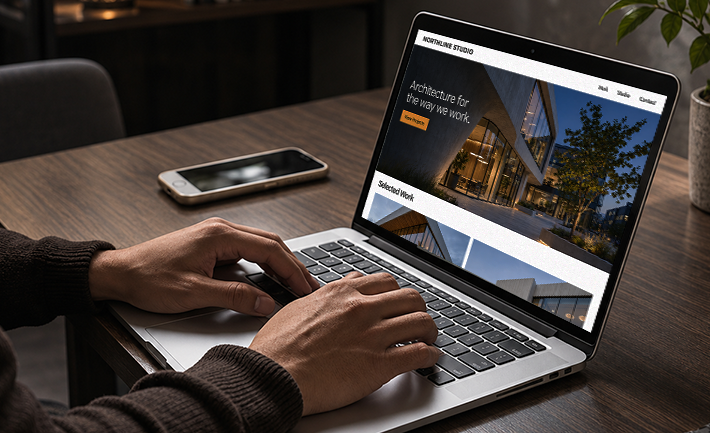
The first screen should identify the business, explain what it offers, and point visitors toward the most relevant next step. For a local service business, that may include the service area and a link to request an estimate. For a design studio, it may be a short description of its work and a link to the portfolio.
Visual hierarchy determines what visitors notice first. A prominent heading can identify the service, a supporting line can explain who it serves, and a button can point to the next step. Typography, spacing, and image placement help those elements work together. If the headline, photo, and several buttons all compete for the same attention, the page becomes harder to read.
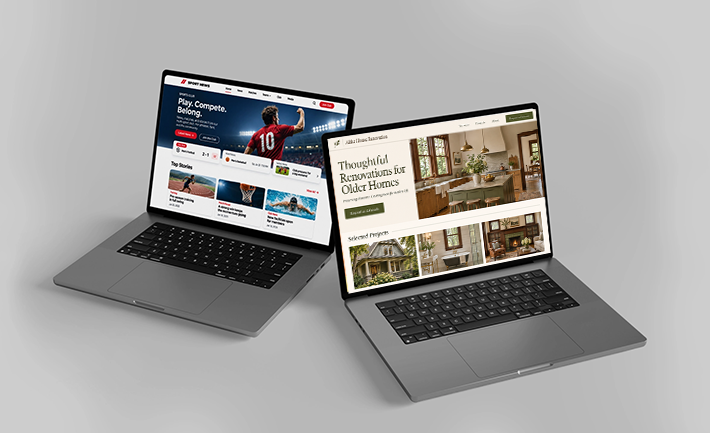
For example, a remodeling company that specializes in older homes could pair that message with a photo of a completed renovation. The headline explains the specialty, and the image gives visitors a reason to explore the work.
Service Pages Answer Specific Customer Questions
The services that bring in the most business often benefit from dedicated pages. A single page listing every service can give visitors an overview. Individual pages provide space to explain what each service includes, answer common questions, and show relevant examples.
An EV charger installation page, for instance, can explain what the electrician checks before installation, what information a homeowner should provide, and what happens during an estimate. A related project photo and a clear inquiry button give visitors a way to move forward once they have enough information.
This structure also helps with SEO. A descriptive page title, a clear main heading, and links from related pages give search engines and readers context about the service. The content itself should answer real customer questions in the language customers use
The Website Shows What Makes the Business Different
Customers can read the same claims about quality and experience on dozens of websites. Specific project details give those claims meaning. A project page can show what the client needed, what made the work challenging, and how the business handled it.
Consider a contractor who remodeled a kitchen in an older home. A finished photo shows the result. A short explanation of how the team improved storage while preserving the original windows shows how the contractor makes decisions. Before-and-after photos, a caption, and a link to the kitchen remodeling service turn that project into useful information for the next homeowner.
The same approach applies to reviews. A review about clear scheduling or careful work in an occupied home can help answer a customer’s concerns when it appears alongside the relevant service or proj
The Mobile Layout Is Designed Around the Content
The right action depends on the business and the page. A visitor browsing a portfolio may want to see another project. Someone who has read a service page may be ready to request an estimate. The button or link should make clear what happens next.
A good inquiry form collects the information the business needs to respond. It explains any required fields, shows clear messages when something is missing, and confirms when the request has been sent. Testing should include checking that the notification reaches the intended inbox. A form can look fine on the page and still fail at that last step.
The Next Step Is Easy to Find and Complete
The right action depends on the business and the page. A visitor browsing a portfolio may want to see another project. Someone who has read a service page may be ready to request an estimate. The button or link should make clear what happens next.
A good inquiry form collects the information the business needs to respond. It explains any required fields, shows clear messages when something is missing, and confirms when the request has been sent. Testing should include checking that the notification reaches the intended inbox. A form can look fine on the page and still fail at that last step.
Final Thoughts
A good business website reflects how the business actually works. It explains the services, shows the quality of the work, and gives customers a clear way to get in touch. The design decisions behind it, from the order of a mobile page to the way a project is presented, should make those tasks easier.
Orange Graphics designs custom websites for businesses that want to present their services clearly and attract the right project inquiries.
To discuss a new website or a redesign, visit https://orangegraphics.us/.